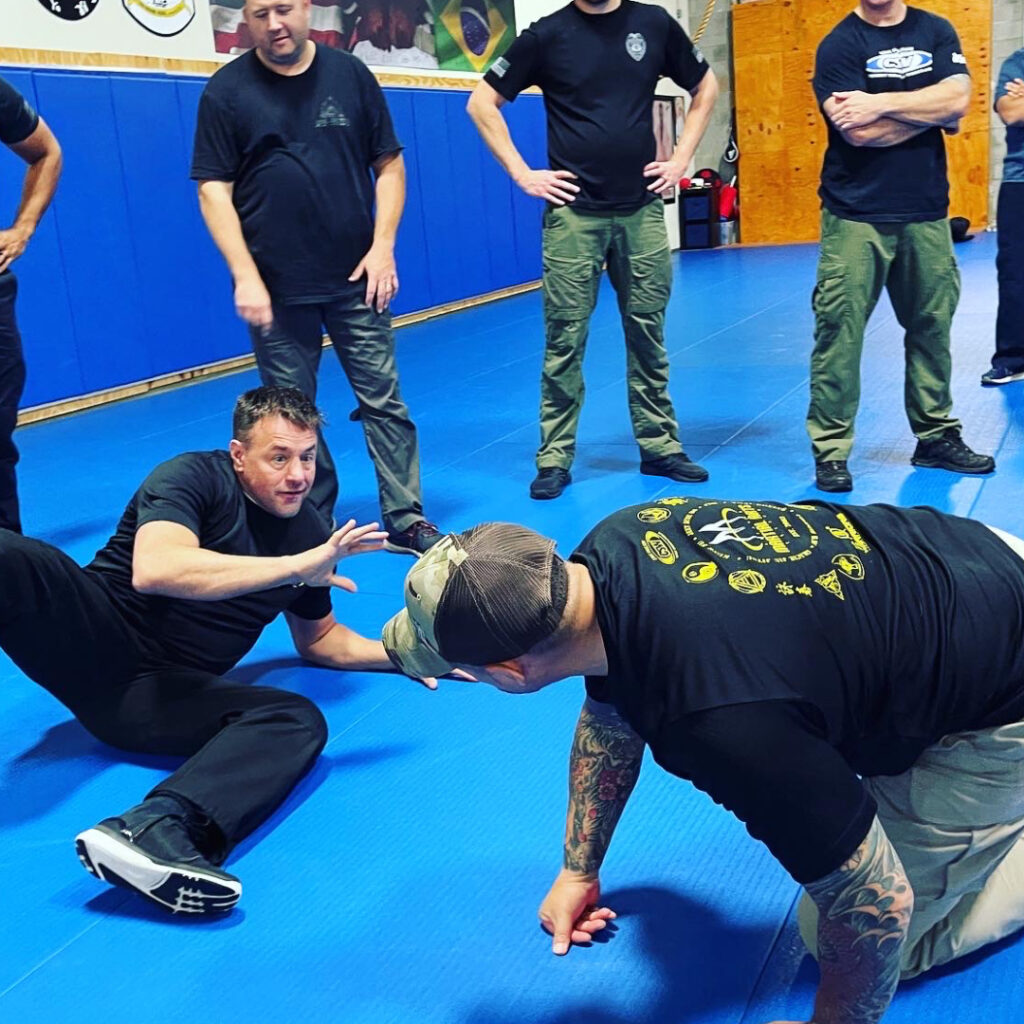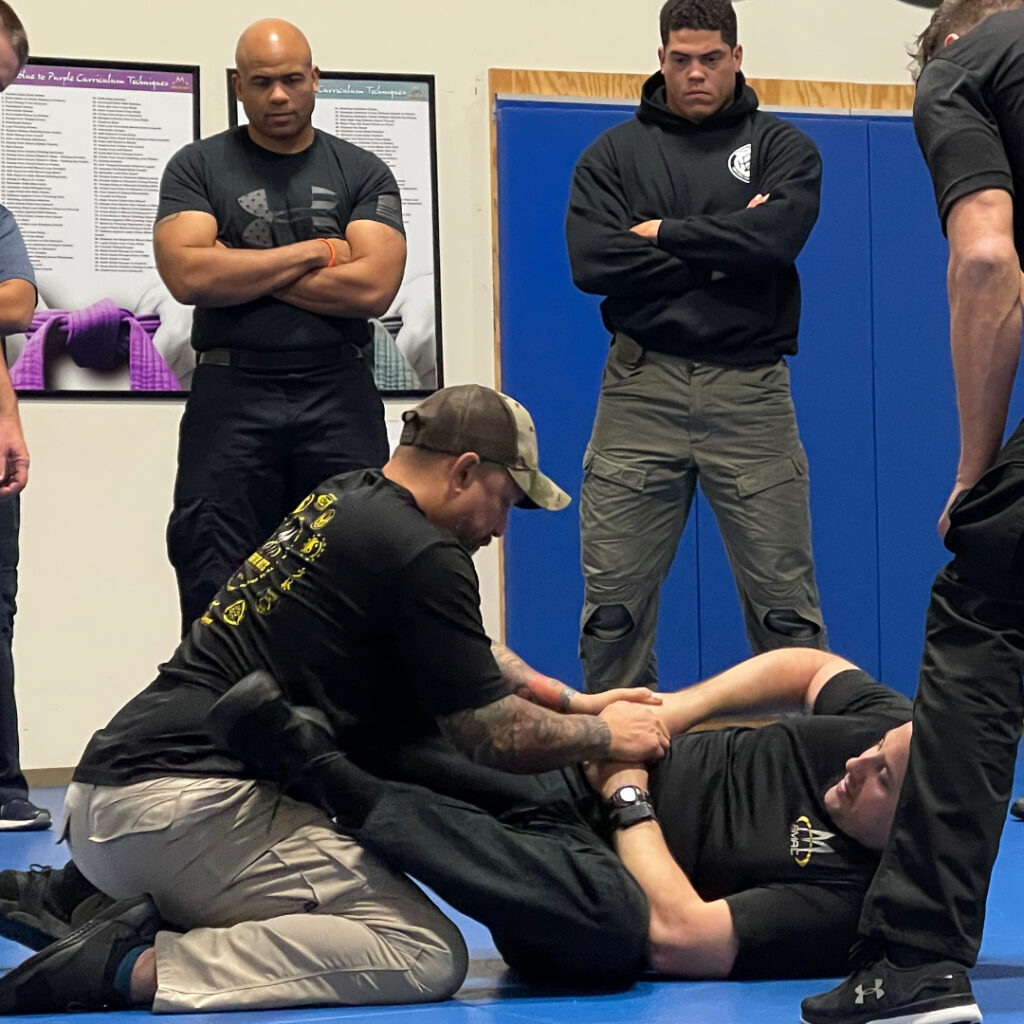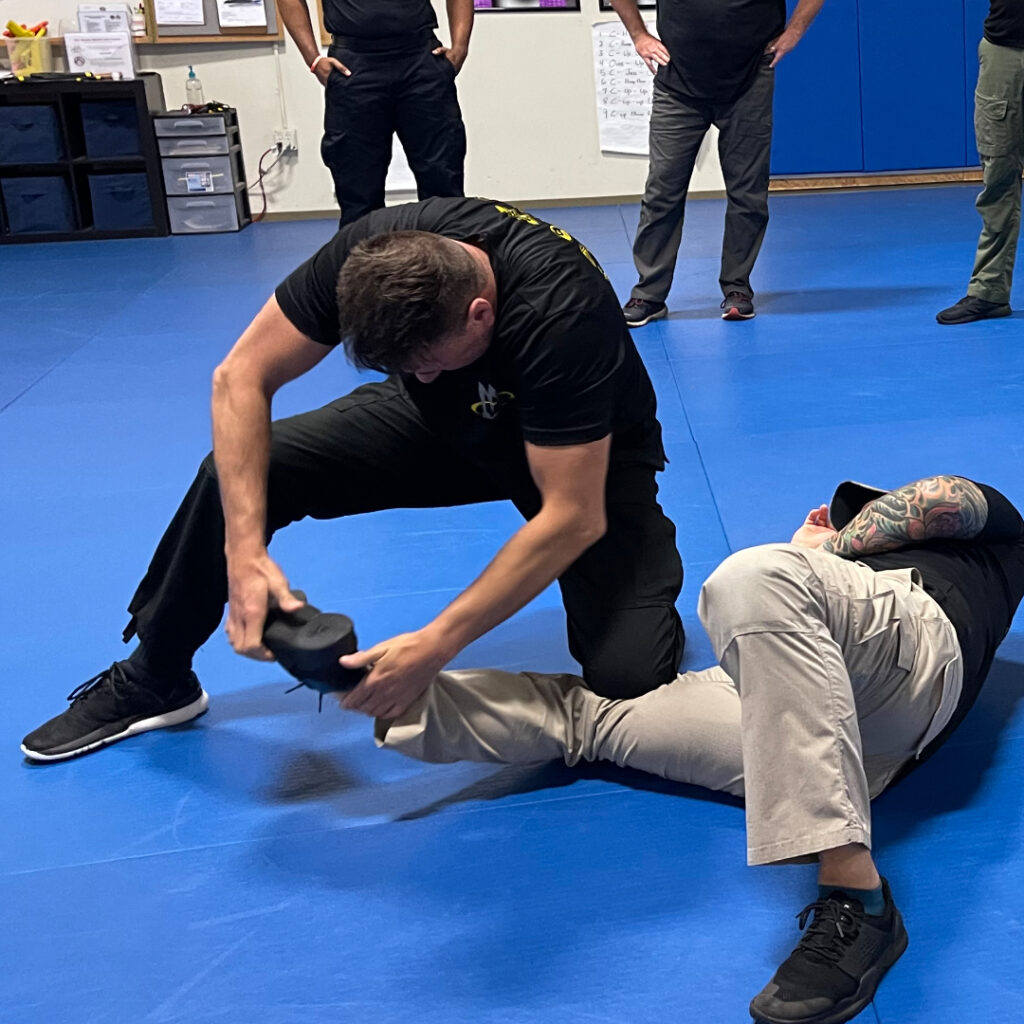
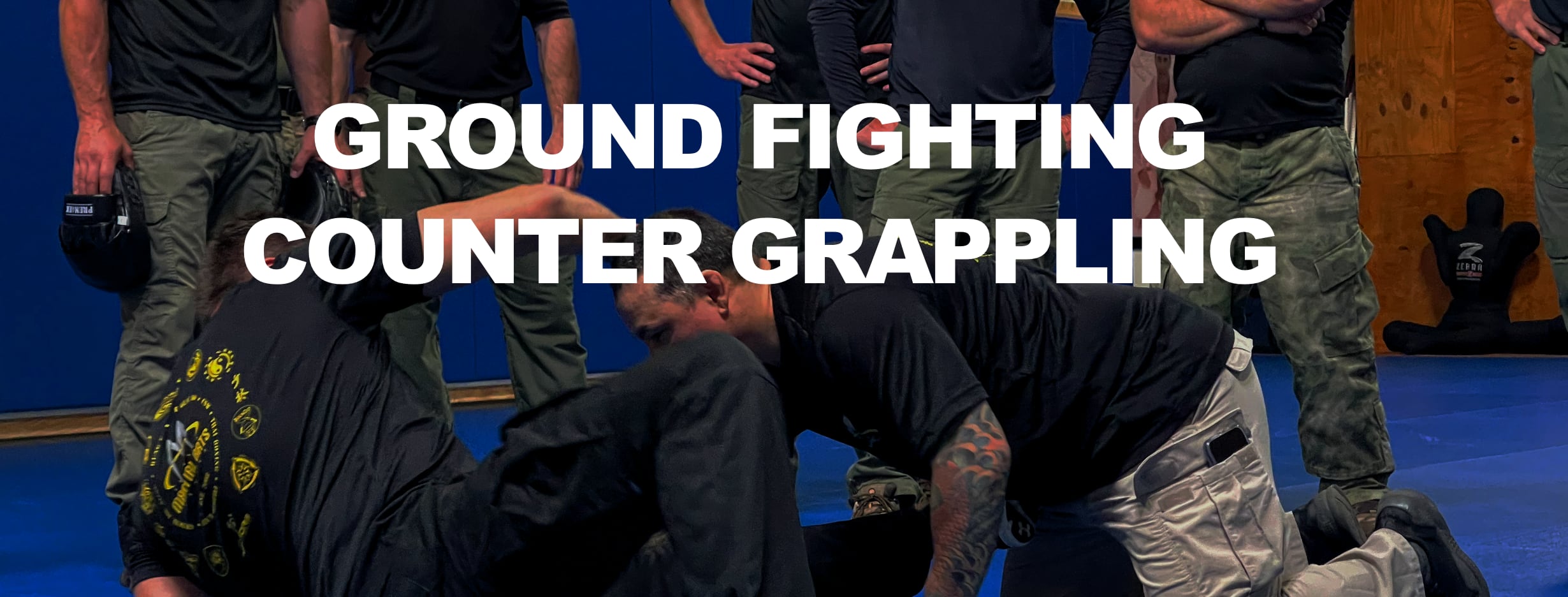
Brazilian Jiu-Jitsu and other grappling arts offer valuable principles, but grappling is not the same as fighting in an operational context. For law enforcement officers and protection specialists, being forced into prolonged grappling can create unacceptable risks. Traditional grappling training often assumes a grappling-to-grapple mindset, which may not be practical or safe when an officer is armed, wearing duty gear, or must maintain public safety and legal defensibility.
The Ground Fighting and Counter-Grappling program was developed to address those realities. It adapts core grappling mechanics to the needs of officers and protectors, with a strong emphasis on control, retention, and transition back to positional advantage or escape. Techniques are selected and modified so they remain effective while an officer is wearing a duty belt, carrying a firearm, or managing a secondary threat.
Training focuses on practical options that are visually appropriate and socially executable. Officers learn how to: control and stabilize defensive encounters, recognize dangerous positions, apply efficient escapes, protect weapons and equipment, and transition from ground engagement back to safer positions or to handcuffing and restraint. Counter-grappling drills emphasize preventing submissions and regaining positional control under realistic pressure.
The curriculum is scenario driven and stress tested. Lessons include progressive resistance, team-based problem solving, and after-action review so officers can practice decision-making under stress. The goal is to give units repeatable, teachable tools that close the gap between sport grappling and real-world survival, improving officer safety, operational effectiveness, and community outcomes.
This program is taught in three different systems that work together:
The Ground-Fighting Program
The ground fighting program teaches how to deal with one or two opponents that are standing while you are on the ground and how to deal with a grappler when you are in a standing position and choose not to engage in grappling. The program also teaches striking methods from all ground positions in grappling, as well as how to strike two and standing opponents while on the ground.
The Counter Grappling Program
The Counter Grappling Program is a lady of grappling that helps the student discover the most common high percentage techniques taught in most of the little grappling systems that are taught today. With this information, the student learns how to use these standard techniques and movements against the grappler to end the fight quickly and decisively.
The Dog Boxing Program (Out of position fighting)
Dog Boxing I is a study of out-of-position fighting. Most martial arts systems teach students to stand and position themselves in specific ways to deliver the most destructive force. During agent, if the student is placed in a position and they are placed under significant stress, they will struggle to get back to the most comfortable position that they have trained to fight. This need to be in a trained position can work against a fighter if his opponent knows how to take him out of his element and put him in an unknown situation. An example would be someone thrown onto the hood of a car or table.
Another example is getting drug out of a car during a carjacking or being shoved against the wall. The Dog Boxing practitioner trains in multiple “out of position” scenarios. Due to this training, it is difficult to place someone who has studied Dog Boxing in an awkward position. They are also versed in the methods needed to produce great destructive force out of awkward positions and situations typically not studied in most martial arts.